 Explore Hotel Internet Solutions
 Contact Us


Full-Service Hotels
Full-service hotels must consider guest rooms, restaurants, event spaces and staff operations.

Give every guest a simpler way to connect while giving hospitality teams clearer control over internet access. HSIA for Hotels brings together guest authentication, session policies, bandwidth allocation and operational visibility around the needs of modern properties.
From a quick login at check-in to dependable connectivity in guest rooms and shared spaces, an effective approach connects the guest journey with the network behind it.
HSIA Hotel explores Hospitality HSIA Solutions designed around real hospitality requirements—not a generic home WiFi setup. Whether you operate an independent hotel, resort or multi-property group, begin with the right access policies, capacity planning and support model.

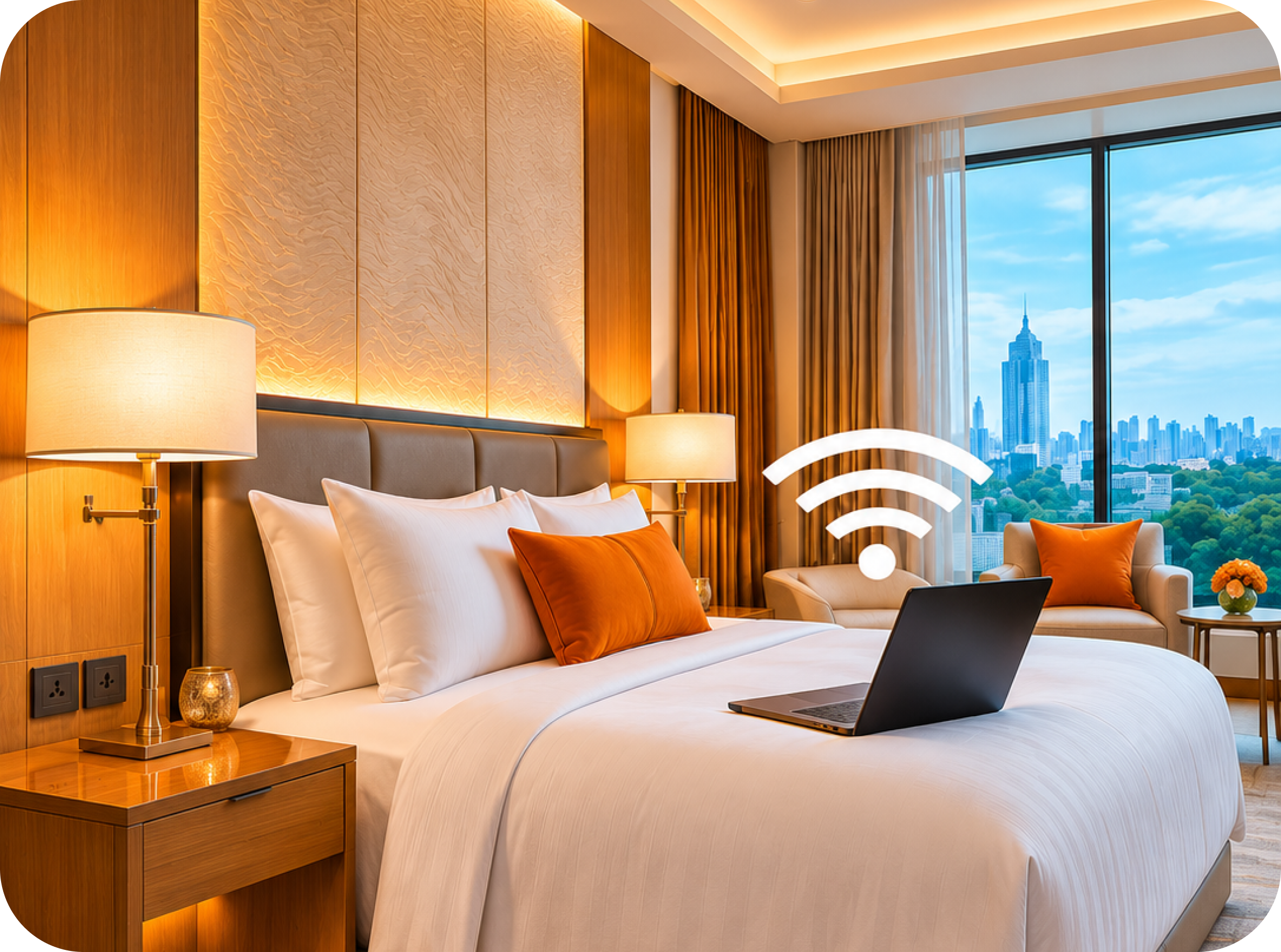
Hotel HSIA is the managed high-speed internet access experience offered to hotel guests and, where appropriate, authorized staff. It can include a guest login journey, terms journey, terms screens, stay-based authentication, session handling and traffic rules. Hotel High Speed Internet Access relies on adequate ISP bandwidth and a well-designed wired and wireless network.
WiFi is the local wireless connection; HSIA describes the internet access service and its management. Hotel WiFi Solutions provide coverage and local connectivity, while an HSIA access layer may manage who can connect, how long sessions remain valid and how traffic is allocated. These functions may be delivered by different components depending on the deployment.
Guests use video calls, streaming services, messaging, cloud applications and multiple devices throughout a stay. In-Room Guest Internet Access must account for the building layout, interference, simultaneous demand and the quality of the upstream connection. A fast speed-test result in the lobby does not prove good coverage in every room.


Full-service hotels must consider guest rooms, restaurants, event spaces and staff operations. Resorts may need outdoor coverage, multi-building backhaul and seasonal capacity planning. Boutique hotels often prioritize simple onboarding and manageable infrastructure with limited local IT resources.
Business hotels should consider video conferencing and meeting-room density. Budget hotels may focus on cost-conscious bandwidth allocation, while extended-stay properties require longer-lived sessions and privacy between residents. Multi-site groups benefit from common standards without ignoring property-specific differences.
Full-service hotels must consider guest rooms, restaurants, event spaces and staff operations.

Resorts may need outdoor coverage, multi-building backhaul and seasonal capacity planning.

Boutique hotels often prioritize simple onboarding and manageable infrastructure with limited local IT resources.

Business hotels should consider video conferencing and meeting-room density.

Budget hotels may focus on cost-conscious bandwidth allocation.

Multi-site groups can benefit from common standards without ignoring property-specific differences.


Extended-stay properties require longer-lived sessions and privacy between residents.
Simplify guest connectivity with secure authentication, intelligent bandwidth management, real-time monitoring, and centralized network control for a seamless hotel internet experience.

A hotel guest WiFi authentication process may use vouchers, room credentials, terms acceptance or other approved methods. Make the guest journey clear on phones and laptops.
A hotel captive portal can show a welcome message, access terms and an authentication step. Test redirection, accessibility and reconnect behavior.
Hotel bandwidth management can apply fair-use limits or priorities when supported. Policies should be based on actual capacity and guest needs.
Hotel PMS integration may support room-based guest verification where compatible interfaces and privacy controls are available. Confirm exact capabilities before publication.
Guest isolation and device information can assist troubleshooting. Limit collection and retention to operationally justified data.
Authentication, authorization and accounting systems can support centrally governed access decisions in suitable deployments.
Hotel WiFi analytics can reveal busy periods, repeated login failures and changing usage patterns through aggregated reports.
Hotel network monitoring can help identify device health, outages, uplink congestion and authentication issues.
Guest network segmentation and tested firewall policies help protect internal property services from untrusted access.
A shared view can support policy consistency, access permissions and change tracking across departments.
Multi-site hotel WiFi administration can support shared templates and reporting while retaining local exceptions.
Cloud-managed hotel WiFi can support remote review and configuration. Check subscription, outage and data-handling dependencies.
Where supported, redundant connections and appropriate gateway configurations can reduce the effect of a single circuit failure.
Session duration, expiry and device limits can help align access with the stay or approved guest policy.
Hotel WiFi security requires more than a login page: encryption, segmentation, administrator controls and monitoring remain essential.
Optional PMS verification and centralized accounting depend on supported integrations and network architecture. The guest login experience should be tested on common devices before rollout.
For guests, a well-designed service can provide clearer onboarding, consistent access policies and fewer confusing login steps. For hotel teams, defined session rules and actionable monitoring can improve support workflows and reduce repeated manual configuration. Hospitality Internet Access becomes easier to evaluate when guest experience and operational responsibilities are considered together.
Hotel Internet Solutions can also support more consistent policy administration across a group, while site-specific coverage and capacity planning remain essential. Outcomes depend on the deployed network, provider capabilities and support processes.
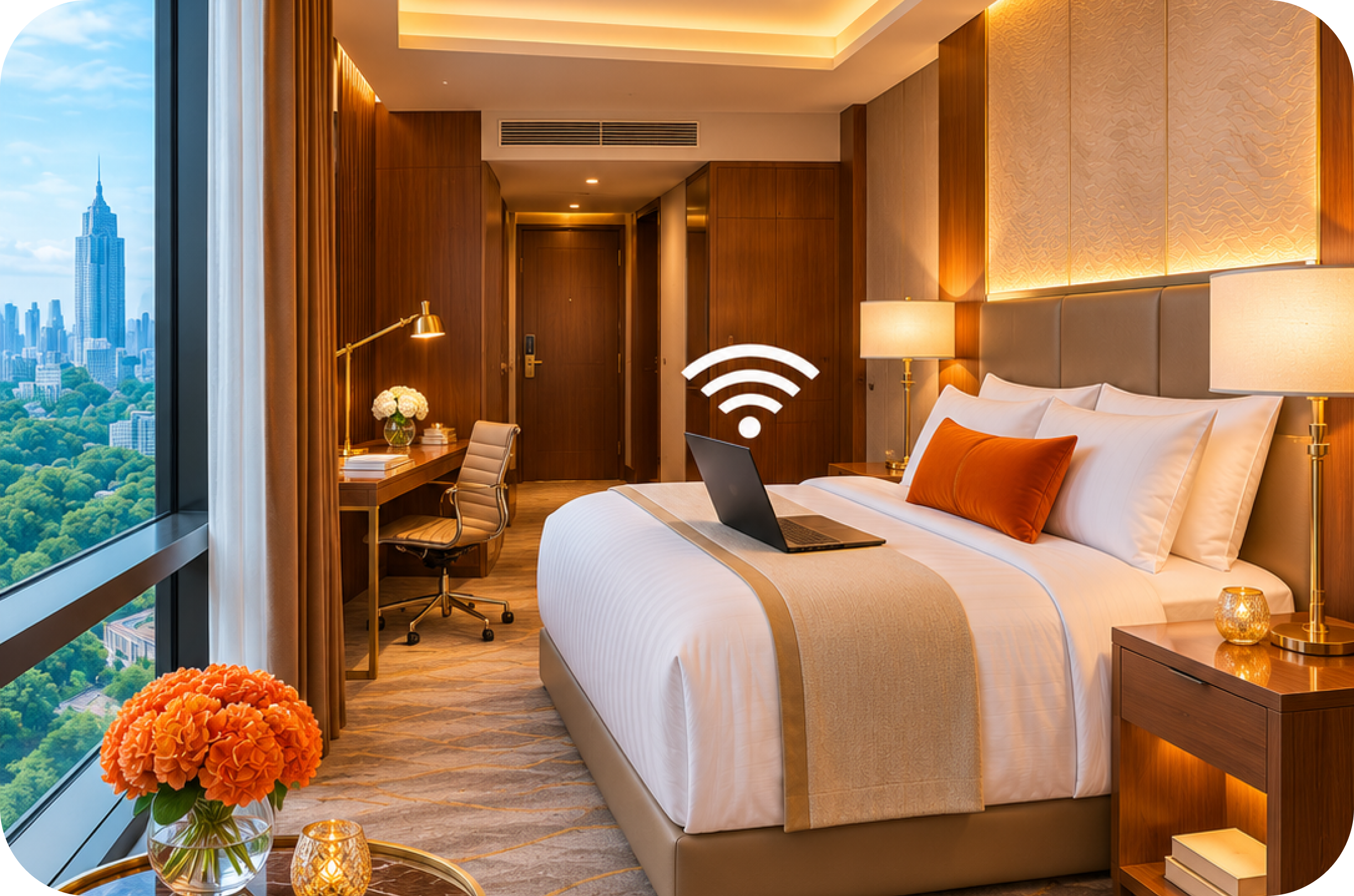
Wireless infrastructure provides radio coverage and local network connectivity. A managed HSIA service may provide guest authentication, session control, bandwidth policies and reporting. Neither substitutes for an adequate ISP circuit, correct switching design or reliable support.
| Aspect | WiFi Infrastructure | Managed HSIA Layer |
|---|---|---|
| Main Role | Wireless connectivity | Guest internet access workflow |
| Typical Functions | Access points, roaming, radio coverage | Login, authorization, sessions and policies |
| Dependencies | Cabling, switching and network design | Gateway, identity systems and connectivity |
| Operational Focus | Coverage and radio health | Guest onboarding and internet use |
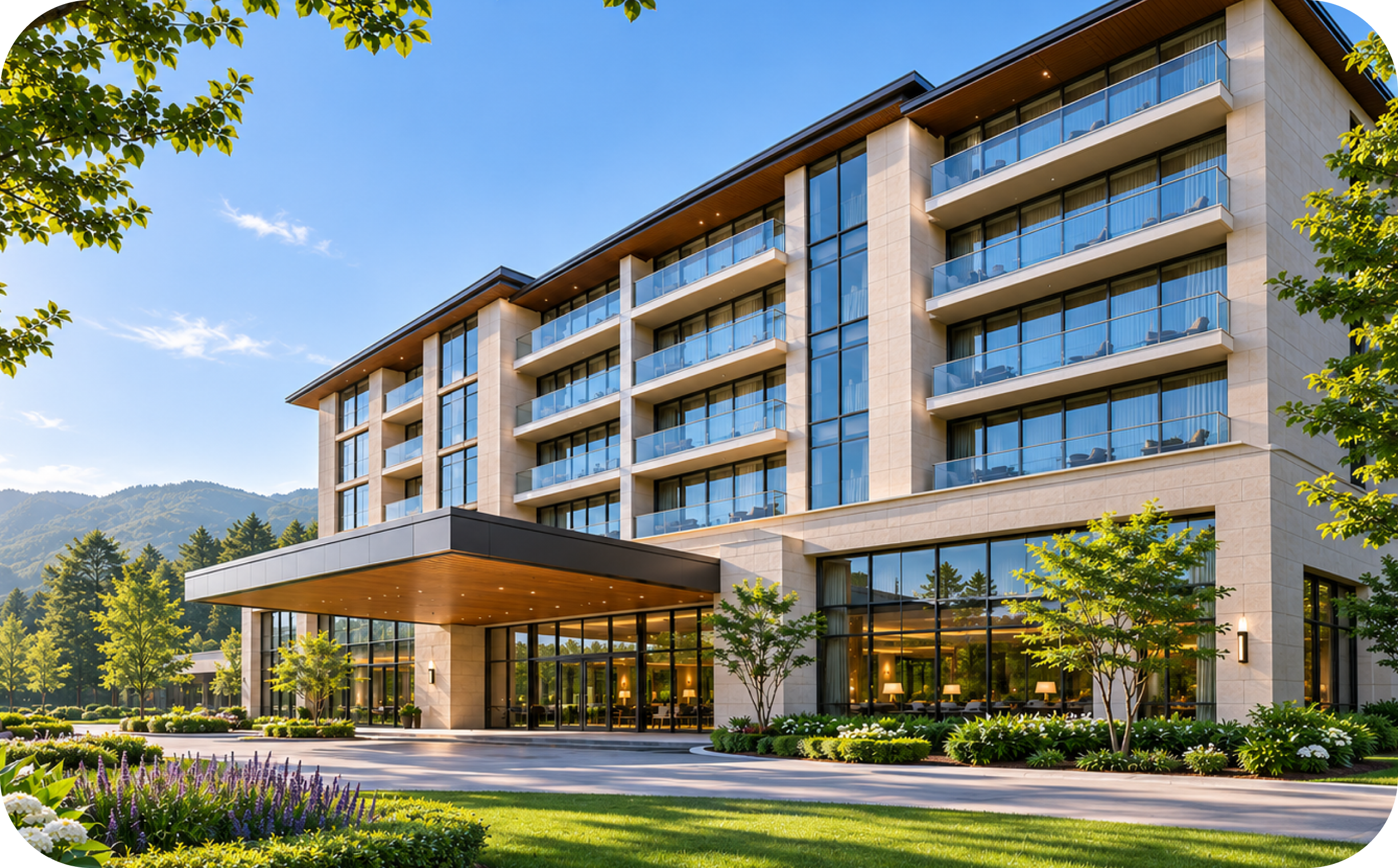
Hotel Guest WiFi should be separated from staff, payment and building systems using appropriate network controls. Use suitable encryption and authentication methods, restrict administrator privileges and validate isolation with tests. A captive portal alone does not secure the wireless network.
Operators should document incident escalation, review software updates and apply privacy-conscious data collection. The right hospitality network security model depends on local requirements, the property's risk profile and the technologies deployed.
Hotel WiFi Management should help teams identify actionable issues rather than overwhelm them with raw data. Useful indicators include access point availability, uplink health, authentication failures, channel utilization and trends in concurrent connections. Hotel WiFi monitoring can help distinguish an upstream ISP fault from a wireless coverage issue.
Aggregated guest WiFi analytics can guide capacity upgrades and reveal recurring problems, provided reporting respects guest privacy. Evaluate role permissions, audit trails, alerts and support escalation before choosing a platform.


An independent hotel may prioritize simple guest access and straightforward support. A small chain can benefit from shared templates and remote visibility. Larger groups may require role-based administration, change governance, standardized reporting and different policies for properties with distinct layouts or ISP providers.
Cloud management may help distributed teams, but confirm what happens when cloud connectivity is unavailable and which functions require additional licenses.
Start with room count, occupancy patterns, device demand, floor plans and public spaces. Review internet capacity, gateway sizing, wireless coverage, guest onboarding, session handling, bandwidth policies, segmentation and reporting. Ask vendors for a clear statement of supported integrations and responsibilities.
Test common guest devices, login recovery, reconnect behavior and fault escalation. Consider the total lifecycle cost of hardware, licenses, installation, monitoring and support—not only the monthly software fee.


HSIA Hotel presents the core considerations behind guest internet management for hotels and related accommodation properties. The emphasis is on a smoother guest connection journey, appropriate access controls, operational visibility and scalable management practices.
Before publication, verify HSIA Hotel’s actual feature set, supported integrations, implementation coverage, service commitments and customer evidence. Do not claim a certification or performance guarantee without documentation.

Explore HSIA for Hotels with a practical view of guest onboarding, internet capacity, access policies and operational visibility. Whether you are reviewing an existing installation or planning a new property, begin with the guest journey and the network requirements that support it.
 Contact Sales
 Request Demo